Tags


📖 BESTIARIUM – ENTRY 023
🍄 MYCONIDS – THE HIDDEN CHILDREN OF THE FUNGAL KINGDOM
🍄 Race: Myconids (Fungal Beings / Mushroom Creatures)
🏛️ Origin:
Fantasy mythology. In this Bestiary, Myconids are an ancient life form that emerged through natural evolution, magical energy, or the merging of vast fungal networks.
⚠️ Danger Level: I–III – From harmless forest mushroomlings to dangerous spore lords. Ancient individuals controlling enormous fungal colonies can pose significant threats.
🌿 Habitat:
Damp forests, ancient groves, swamps, underground caves, abandoned ruins, and vast mushroom forests. They favor dark, humid environments rich in nutrients.
🍄 Appearance:
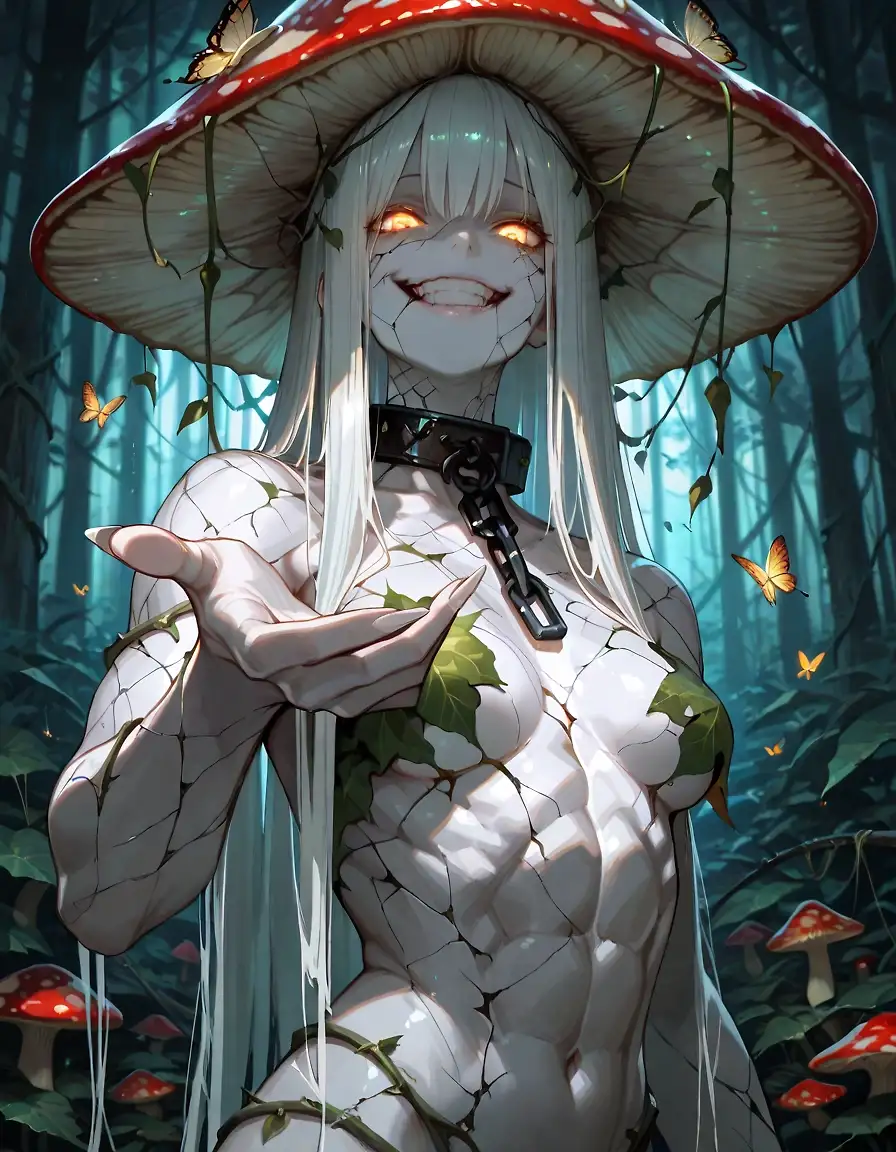
Myconids have entirely fungal bodies, varying greatly by subspecies and age.
Small individuals are often round with short limbs and large mushroom caps. Larger Myconids develop humanoid bodies with arms, legs, and recognizable facial features.
Ancient specimens may reach several meters in height and merge with surrounding fungal networks.
🧠 Intelligence:
Small mushroomlings act mostly on instinct. Mature Myconids may develop humanlike intelligence, while ancient individuals possess extensive knowledge of their surroundings.
🏘️ Society:
Myconids live alone or in colonies. Large communities establish underground fungal settlements connected through shared mycelium networks.
Colonies are often led by ancient or highly intelligent Myconids. Leadership depends on age, knowledge, and connection to the fungal network.
✨ Abilities:
- Spore-based communication
- Poisonous, sleeping, or confusion-inducing spores
- Accelerated fungal growth
- Regeneration of damaged body parts
- Perception through underground mycelium
- Healing spores in certain subspecies
- Control of simple fungal organisms by powerful individuals
🍄 Diet:
Myconids absorb nutrients from soil, dead plants, rotting wood, and other organic matter. Some form symbiotic relationships with living plants.
🌱 Reproduction:
Myconids reproduce through spores. Under favorable conditions, these develop into small mushroomlings that may take decades to reach maturity.
❤️ Love and Bonds:
Intelligent Myconids can experience affection, friendship, and deep emotional bonds.
Relationships often develop through long-term exchanges of thoughts and emotions using special bonding spores.
Romantic relationships with other intelligent races are rare but possible.
⚔️ Behavior:
Most Myconids are peaceful or neutral. They attack only when their colonies, food sources, or spore offspring are threatened.
Poisonous and parasitic subspecies may behave more aggressively.
🍄 Known Subspecies:
1. Forest Mushroomling (Level I)
Small, mostly harmless fungal creatures living in groups among tree roots. Shy, curious, and occasionally playful.
2. Glowing Myconid (Level I–II)
Bioluminescent cave dwellers. Their spores produce light, while some individuals possess healing or calming abilities.
3. Poison Myconid (Level II–III)
Territorial and dangerous. Produces toxic spores capable of causing poisoning, hallucinations, or temporary paralysis.
4. Parasitic Myconid (Level II–III)
A rare, aggressive subspecies. Its spores can infect other creatures and influence their behavior, though infection does not automatically grant complete control.
5. Ancient Myconid (Level III)
Powerful, centuries-old beings capable of controlling vast mycelium networks and influencing the growth of entire mushroom forests.
📜 Special Characteristics:
Myconid colonies exchange information through their shared fungal networks.
As a result, individual Myconids sometimes appear capable of sensing events occurring far beyond their immediate surroundings.
Comments (15)
📖 BESTIARIUM – ENTRY 023
🍄 MYCONIDS – THE HIDDEN CHILDREN OF THE FUNGAL KINGDOM
🍄 Race: Myconids (Fungal Beings / Mushroom Creatures)
🏛️ Origin:
Fantasy mythology. In this Bestiary, Myconids are an ancient life form that emerged through natural evolution, magical energy, or the merging of vast fungal networks.
⚠️ Danger Level: I–III – From harmless forest mushroomlings to dangerous spore lords. Ancient individuals controlling enormous fungal colonies can pose significant threats.
🌿 Habitat:
Damp forests, ancient groves, swamps, underground caves, abandoned ruins, and vast mushroom forests. They favor dark, humid environments rich in nutrients.
🍄 Appearance:
Myconids have entirely fungal bodies, varying greatly by subspecies and age.
Small individuals are often round with short limbs and large mushroom caps. Larger Myconids develop humanoid bodies with arms, legs, and recognizable facial features.
Ancient specimens may reach several meters in height and merge with surrounding fungal networks.
🧠 Intelligence:
Small mushroomlings act mostly on instinct. Mature Myconids may develop humanlike intelligence, while ancient individuals possess extensive knowledge of their surroundings.
🏘️ Society:
Myconids live alone or in colonies. Large communities establish underground fungal settlements connected through shared mycelium networks.
Colonies are often led by ancient or highly intelligent Myconids. Leadership depends on age, knowledge, and connection to the fungal network.
✨ Abilities:
- Spore-based communication
- Poisonous, sleeping, or confusion-inducing spores
- Accelerated fungal growth
- Regeneration of damaged body parts
- Perception through underground mycelium
- Healing spores in certain subspecies
- Control of simple fungal organisms by powerful individuals
🍄 Diet:
Myconids absorb nutrients from soil, dead plants, rotting wood, and other organic matter. Some form symbiotic relationships with living plants.
🌱 Reproduction:
Myconids reproduce through spores. Under favorable conditions, these develop into small mushroomlings that may take decades to reach maturity.
❤️ Love and Bonds:
Intelligent Myconids can experience affection, friendship, and deep emotional bonds.
Relationships often develop through long-term exchanges of thoughts and emotions using special bonding spores.
Romantic relationships with other intelligent races are rare but possible.
⚔️ Behavior:
Most Myconids are peaceful or neutral. They attack only when their colonies, food sources, or spore offspring are threatened.
Poisonous and parasitic subspecies may behave more aggressively.
🍄 Known Subspecies:
1. Forest Mushroomling (Level I)
Small, mostly harmless fungal creatures living in groups among tree roots. Shy, curious, and occasionally playful.
2. Glowing Myconid (Level I–II)
Bioluminescent cave dwellers. Their spores produce light, while some individuals possess healing or calming abilities.
3. Poison Myconid (Level II–III)
Territorial and dangerous. Produces toxic spores capable of causing poisoning, hallucinations, or temporary paralysis.
4. Parasitic Myconid (Level II–III)
A rare, aggressive subspecies. Its spores can infect other creatures and influence their behavior, though infection does not automatically grant complete control.
5. Ancient Myconid (Level III)
Powerful, centuries-old beings capable of controlling vast mycelium networks and influencing the growth of entire mushroom forests.
📜 Special Characteristics:
Myconid colonies exchange information through their shared fungal networks.
As a result, individual Myconids sometimes appear capable of sensing events occurring far beyond their immediate surroundings.
Generation data

More by azariel